

Restorative Dentistry
Inlays & Onlays in Reston, VA
A conservative repair that keeps more of your natural tooth.
Inlays and onlays are smaller than full crowns, made to fit inside or on top of a damaged tooth that needs more than a filling but not a full crown.

Inlays & Onlays
Inlays and onlays in Reston, VA: restorations smaller than a full crown that repair a damaged tooth while keeping more of your natural tooth structure.
Repair the damage, keep the tooth
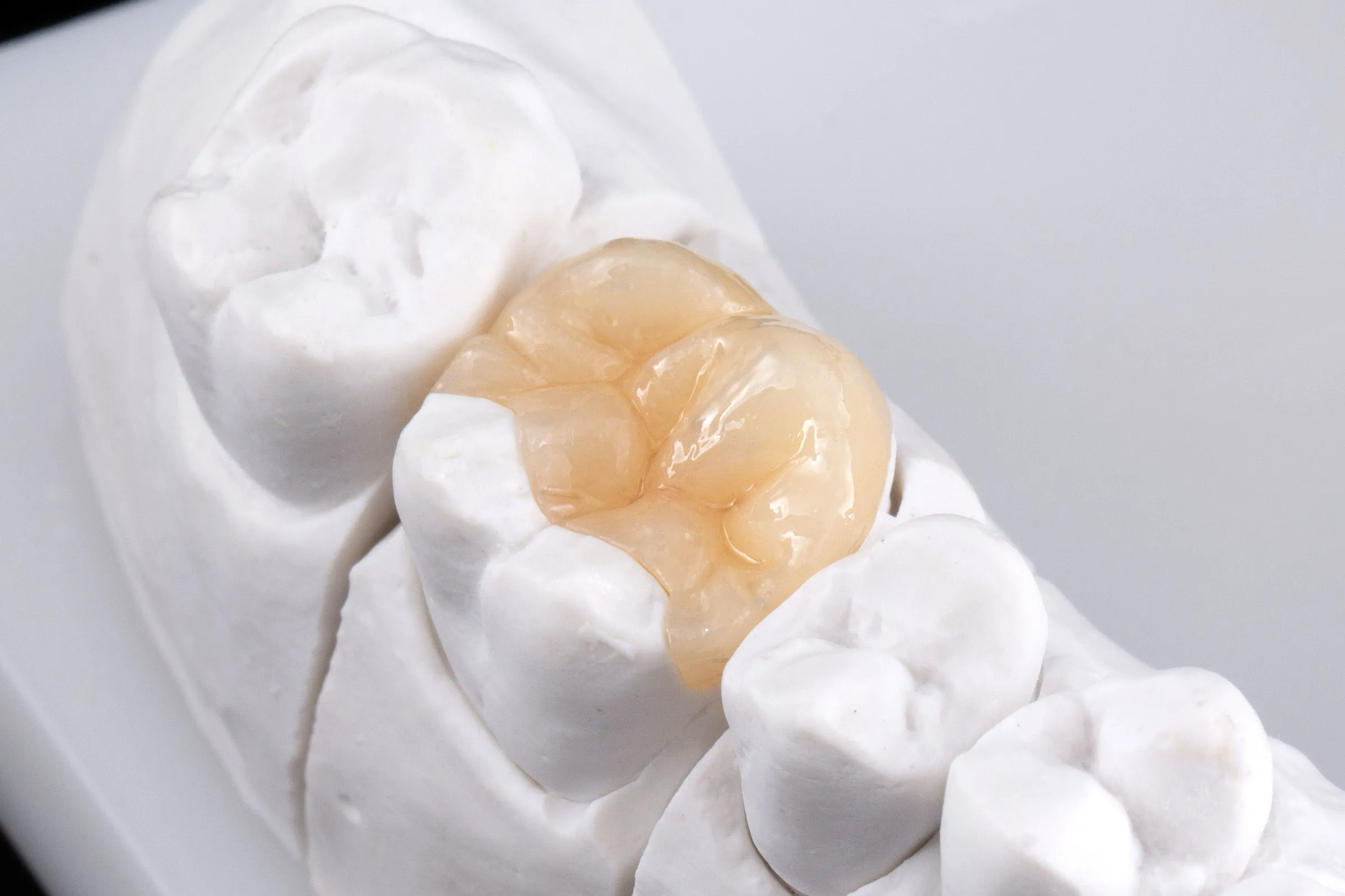
Inlays and onlays are restorations for teeth that are damaged but not too badly damaged. An inlay fits inside the chewing surface of a back tooth, between the raised points called cusps. An onlay also covers one or more of those cusps, so it protects a larger part of the biting surface. Because each one replaces only the damaged part of the tooth, more of your natural tooth structure stays in place than with a full crown. Each restoration is made to fit the prepared tooth and then bonded in place.
Between a filling and a crown
Restorative dentistry ranges from a simple filling to a full crown. A filling repairs a small area of damage, and a crown covers the whole tooth to restore its shape and strength. An inlay or onlay sits between the two, for damage too large for a filling that still leaves plenty of healthy tooth to keep.
Three levels of coverage
- InlayFits within the cusps of the chewing surface.
- OnlayExtends over one or more cusps of the tooth.
- CrownCovers the whole tooth when damage is extensive.
How an inlay or onlay is made
- An exam and digital X-rays of the damaged tooth
- Damaged structure removed, healthy tooth kept
- An iTero digital scan in place of impression trays
- A restoration made to match the prepared tooth
- Bonded in place and checked against your bite
Not sure which repair you need?
An exam shows how much of the tooth is damaged and which restoration suits it. When the damage is larger, a dental crown may be the better choice, and a small cavity may only need a tooth-colored filling. You can see how the scanning and imaging work on our technology page.
The short answer
Inlays and onlays are restorations that repair a damaged tooth and are smaller than a full crown, fitting inside or on top of the tooth. An inlay sits within the cusps of the chewing surface, while an onlay also covers one or more cusps, and each is made from a digital scan to fit the prepared tooth before it is bonded in place. They suit teeth that are damaged but not too badly damaged, because they replace only the damaged part and keep more of your natural tooth structure.
Inlays & onlays FAQ
- What are inlays and onlays?
- Inlays and onlays are restorations that repair a damaged tooth and are smaller than a full crown. They fit inside or on top of the tooth, replacing only the part that is damaged. That makes them a good fit for teeth that are not too badly damaged. Because less of the tooth is covered, you keep more of your natural tooth structure.
- What is the difference between an inlay and an onlay?
- An inlay fits inside the chewing surface of a tooth, while an onlay also covers one or more of its cusps. The cusps are the raised points on the biting surface of a back tooth. An onlay is used when the damage reaches one of those points, so the restoration needs to protect it. Both are made to fit the tooth and bonded in place.
- How is an inlay or onlay different from a crown?
- A crown covers the whole tooth, while an inlay or onlay covers only the damaged part. Crowns are used to restore the shape and strength of teeth with severe decay or breaks. When the damage is smaller, an inlay or onlay repairs it while keeping more of the healthy tooth. An exam shows which option suits your tooth.
- How is an inlay or onlay different from a filling?
- A filling is placed directly into a small area of damage, while an inlay or onlay is made to fit the tooth before it is bonded in place. Fillings suit small cavities and minor damage. When the damaged area is larger, a made-to-fit restoration gives the tooth more support. We explain the choice for your tooth after your exam.
- Do you use impressions to make inlays and onlays?
- In most cases, no, because an iTero digital scan replaces traditional impression material. The scanner captures a 3D model of your teeth and bite, which we use to plan restorations. It is more comfortable than a tray of putty. We can also show you the scan on screen, so you see what we see.
- How much do inlays and onlays cost?
- The cost of an inlay or onlay depends on the tooth and the restoration it needs, so it varies from case to case. Restorative treatments differ in complexity, and each one varies in cost. After an exam and X-rays, we can give you an estimate before treatment begins. Insurance benefits and financing options can help, and our front desk will verify your coverage first.
Book a visit
Start your smile journey.
Hours


Google reviews
Insurance & financing
We accept most PPO dental insurance plans. Our team verifies your benefits before treatment and helps you get the most from your coverage.
Aetna · CareFirst BlueCross BlueShield · Cigna · Delta Dental · BlueCross BlueShield FEP Dental · Guardian · MetLife
Financing through Cherry, Proceed Finance, LendingClub and HFD.